How to Prepare Your Home’s Siding for Painting
Is your home’s siding starting to fade, peel, or just look a little tired? Maybe you’re dreaming of a fresh coat of paint to boost your curb appeal. But before you pick up a brush, there’s a world of prep work that makes all the difference between a paint job that pops and one that flakes.
At Kroll Siding, we know every successful siding painting project starts with careful, thoughtful preparation—no shortcuts, no guesswork. Let’s walk through the essential steps so your siding looks great and stands up to whatever the weather throws at it.
Why Prep Matters: The Foundation of a Great Paint Job
Think of painting your siding like baking bread. You can’t just toss everything in the oven and hope for the best. Preparation is the yeast—without it, your efforts fall flat. Prepping siding properly means your paint will stick better, last longer, and look sharper.
A well-prepped surface resists peeling, bubbling, and sun damage. It also prevents hidden problems like mold or trapped moisture. If you skip the prep, you’re inviting trouble down the road.
Safety First: Quick Checklist Before You Start
Safety isn’t just a box to check. It’s the scaffolding holding your project together.
- Wear gloves and safety glasses—splinters and cleaning solutions don’t mix well with bare skin or eyes.
- Use a sturdy ladder rated for outdoor use when reaching higher spots.
- If your home was built before 1978, check for lead paint. The EPA has strict rules for handling it safely.
- Always let someone know you’re working outside, especially if you’ll be on a ladder.
Cleaning Siding: The First and Most Crucial Step
Paint clings best to clean siding. Dirt, dust, mildew, and old paint residue are like oil on a frying pan—nothing sticks.
- Start with a gentle rinse from a garden hose.
- Use a siding-safe cleaning solution (or mild soap and water) and a soft brush for stubborn spots.
- For mildew, a mix of water and a small amount of bleach (use caution) will do the trick.
- Avoid pressure washers unless you’re experienced; too much force can damage siding and force water behind panels.
For more details on professional cleaning, see our siding cleaning services.
Inspecting for Damage: Don’t Paint Over Problems
Walk the perimeter like a detective. Look for:
- Cracks or splits in the siding
- Loose or missing boards or panels
- Rot, soft spots, or signs of insect damage
- Failed caulking around windows, doors, and trim
If you spot trouble, now’s the time for Siding Flashing Repair near you or other targeted fixes. Painting over damaged siding is like putting a bandage on a leaky pipe—problems will resurface quickly.
Repairing Siding: Smooth the Way for Paint
Patch small holes or cracks with the appropriate exterior filler. Replace sections that are warped, rotten, or beyond saving. Make sure all repairs are completely dry and sanded flat before moving on.
For trim and moldings, reattach any loose pieces and caulk gaps to keep moisture out.
Sanding: Creating a Surface Paint Loves
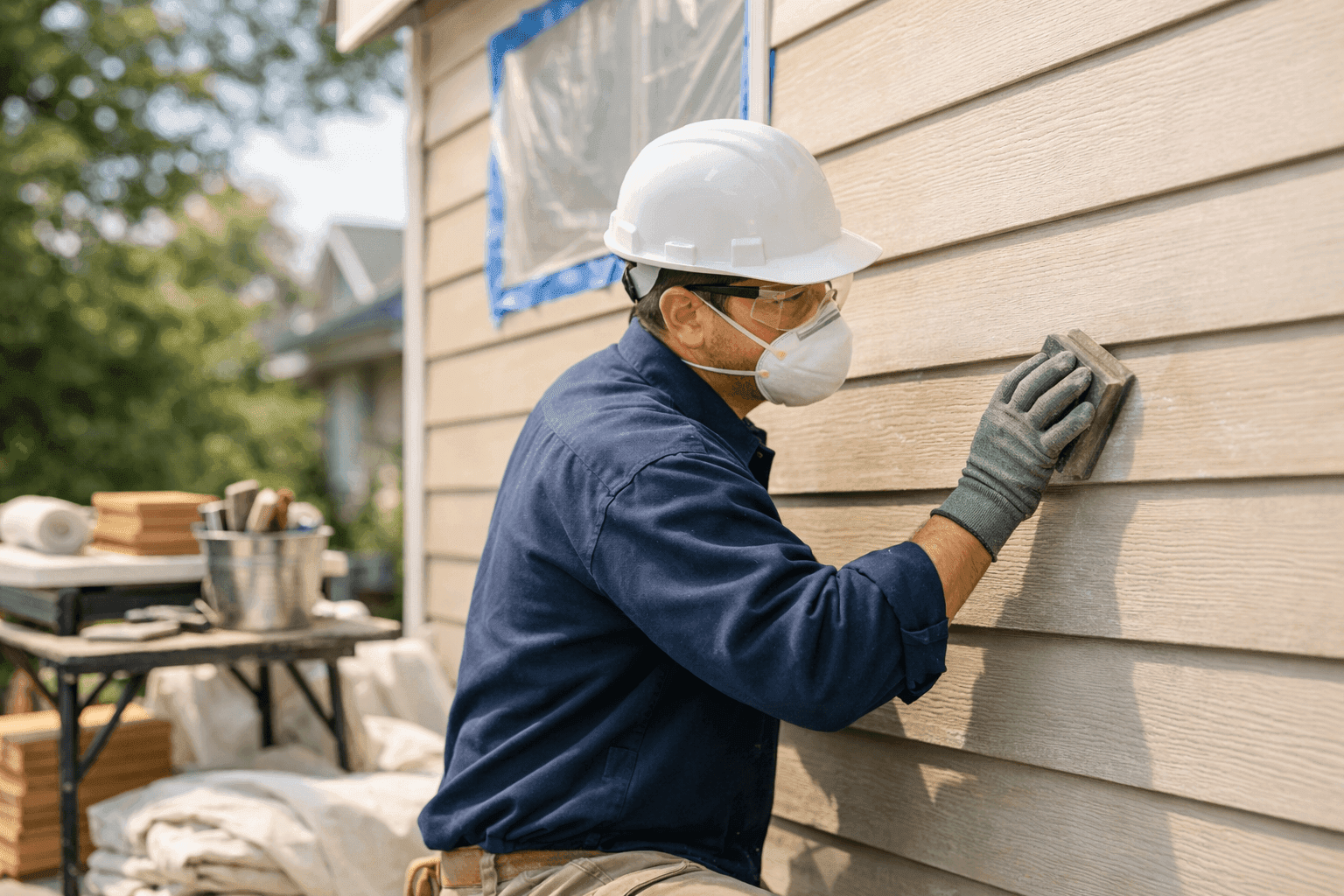
Sanding is like giving your siding a gentle exfoliation. It scuffs away gloss, smooths repairs, and helps paint grip.
- Use medium-grit sandpaper for rough spots and feather edges where old paint meets bare siding.
- Always sand with the grain, not against it.
- Wipe away dust with a clean, damp cloth when finished.
Priming: Laying the Groundwork
Primer is more than just an extra layer. It seals repairs, blocks stains, and helps paint stick—especially on bare wood or new siding.
- Choose a primer suited for your siding material (wood, fiber cement, metal, or vinyl).
- Apply evenly and allow full drying time, per the manufacturer’s instructions.
- Don’t rush—primer needs to cure to do its job.
Material-Specific Prep: What Your Siding Needs
Every siding material has its quirks. Here’s what to watch for:
Wood Siding
- Sand rough spots and check for rot.
- Prime bare wood thoroughly.
- Use caulk to seal joints.
Vinyl Siding
- Clean thoroughly; paint won’t stick to chalky surfaces.
- Sand lightly if the surface is glossy.
- Use paint formulated for vinyl—regular paint can peel.
Fiber Cement Siding
- Repair chips and cracks with patching compound.
- Use a special primer for cement-based materials.
Metal Siding
- Remove any rust with a wire brush.
- Prime with a rust-inhibiting primer.
- Make sure the surface is dry before painting.
Stucco Siding
- Patch cracks with stucco repair mix.
- Brush off chalky residue.
- Use a masonry primer.
Common Mistakes—and How to Dodge Them 🚩
Even seasoned DIYers trip up sometimes. Watch out for:
- Skipping cleaning or sanding
- Painting over wet or dirty surfaces
- Using indoor paint outside
- Ignoring manufacturer directions for primer or paint
- Painting in extreme heat or cold
A little extra effort up front saves hours of frustration (and repainting) later.
How Prep Impacts Paint Longevity and Curb Appeal
Prep isn’t just about the paint job—it’s about pride in your home. Well-prepped siding holds color longer, resists chipping, and keeps your home looking sharp year after year.
Professional prep also helps your paint withstand the elements—rain, sun, snow, and wind. Without it, paint fades fast and problems like moisture intrusion can sneak in.
DIY vs. Hiring a Pro: When to Call for Backup
Painting your own siding can be rewarding, but it’s also a big job. Consider calling in pros if:
- Your siding shows signs of extensive damage or rot
- There are high or hard-to-reach areas
- You’re dealing with lead paint or asbestos
- You want a warranty or professional-grade finish
Kroll Siding offers siding painting services with attention to every detail.
Tools and Materials You’ll Need
Get organized before you begin. Most siding painting prep projects call for:
- Sturdy ladder
- Work gloves and safety glasses
- Exterior-grade cleaners and brushes
- Sandpaper (medium and fine grit)
- Caulk and caulk gun
- Exterior filler or patch
- Primer (matched to your siding)
- Drop cloths or tarps
Timeline and Disruption: What to Expect
Prepping siding for painting isn’t a one-hour fix. It can take several days—especially for larger homes or if repairs are needed. Most prep work is noisy and messy, but the results are worth it.
Plan ahead for weather. Dry, mild days are best for cleaning and painting. Wet or humid weather can slow drying times and cause delays.
Seasonal Considerations: When’s the Best Time to Prep and Paint?
Spring and early fall are prime painting seasons. Avoid painting in the heat of summer or during freezing winter conditions. Paint needs time (and the right temperature) to cure properly.
Signs Your Siding Needs Professional Attention
If you notice any of these, call in the pros:
- Persistent mildew or mold that keeps coming back
- Soft, spongy spots in wood or fiber cement
- Peeling paint that returns quickly after each coat
- Large-scale cracks, holes, or water stains
- Unexplained drafts or increased energy bills (could signal siding or insulation issues)
Frequently Asked Questions
Do I have to remove all old paint before repainting?
Not always, but loose or flaking paint must go. Sand and feather rough edges for a smooth transition.
Can I paint over vinyl siding?
Yes, but only with paint specifically designed for vinyl. Prep is extra important—clean, sand, and prime as needed.
What if I find hidden damage?
Pause and repair before painting. Ignoring damage only leads to bigger headaches later.
Preventive Maintenance: Keep Your Siding Looking Fresh
Regular cleaning, timely repairs, and annual inspections keep your siding ready for its next paint job. Catching small issues early prevents big, costly repairs later on.
And if you ever need Siding Flashing Repair near you, Kroll Siding is just a call away.
Ready to refresh your home’s exterior? Don’t let prep work hold you back. Call Kroll Siding now — or reach us anytime at 888-892-6286 .