How to Spot Siding Damage Before It Spreads
Does the outside of your home ever feel like a silent alarm bell? For many homeowners, siding damage creeps in quietly—until one day, the problem is loud and costly. At Kroll Siding, we know that regular siding checks can save you from headaches, big repair bills, and lost curb appeal.
You don’t need to be a construction expert to catch early trouble. With a little attention and the right steps, you can spot problems before they spread. Here’s how.
Why Regular Siding Checks Matter
Think of your siding like your home’s raincoat. It stands between your house and the elements—rain, snow, wind, and sun. Small issues, if ignored, can leak into bigger structural problems. According to the International Association of Certified Home Inspectors (InterNACHI), routine siding inspections are a key part of a safe, healthy home.
Visual Red Flags: What to Look For 👀
Start with a slow walk around your home. Sometimes, your eyes are your best tool. Watch for:
- Cracks or splits—even tiny ones can let water in.
- Warped or bulging panels—a sign something’s going on behind the surface.
- Peeling paint or bubbling—could mean trapped moisture.
- Discoloration or dark streaks—often a sign of mold or mildew.
- Loose or missing trim—lets pests and water sneak in.
If you spot any of these, it’s time for a closer look.
The Tactile Test: Trust Your Hands
Your sense of touch can reveal what eyes miss. Gently press on siding panels, especially near seams and at ground level. Does it feel soft, spongy, or crumbly? That could signal rot or hidden water damage that’s eating away at your home’s defenses.
Inspecting Hidden Trouble Spots
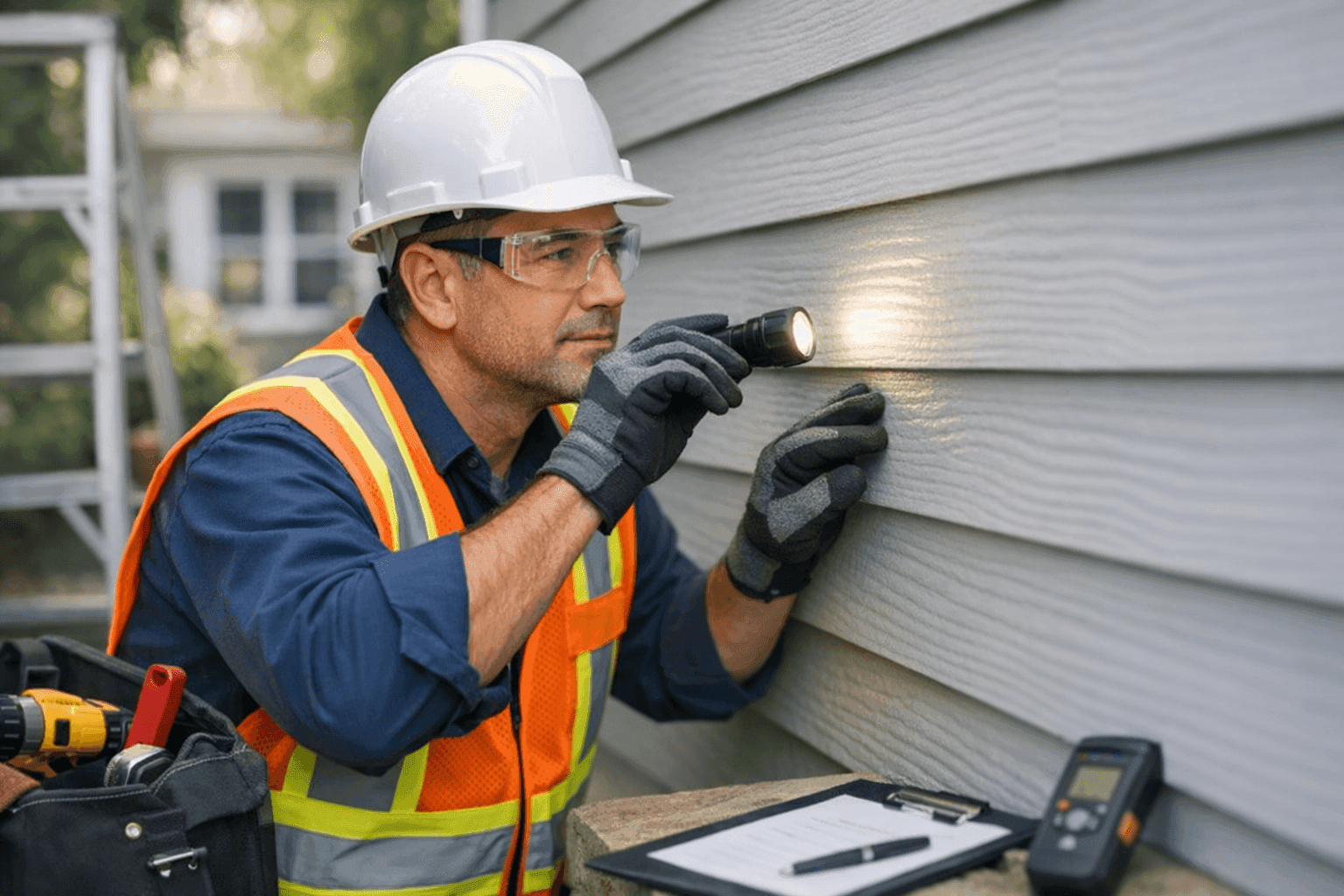
Not all damage is front and center. Get low and peek behind shrubs, under eaves, and around decks. These shadowy spots trap moisture—prime real estate for rot and insects. Use a flashlight if you need to. Don’t forget to look at the bottoms of walls, where splash-back from rain can take a toll.
Siding Flashing: The Unsung Hero
Flashing is the thin metal or plastic barrier that keeps water from sneaking behind your siding. It’s usually tucked around windows, doors, and rooflines. Damaged or missing flashing can cause water to seep in, leading to rot or even structural issues. If you spot rust, gaps, or warping, consider a Siding Flashing Repair.
How to Check for Warping and Buckling
Warped siding often means trouble beneath the surface. Stand back and view your siding from different angles. Are boards bowing out? Is there a wavy look? These are classic signs that water or heat has bent the material, or that something’s shifted underneath.
Signs of Rot: Know What to Smell and See
Rot makes itself known in sneaky ways. Look for:
- Soft, crumbly wood in any siding or trim.
- Musty odors—they’re a red flag for moisture problems.
- Discolored patches with a “spongy” feeling.
Rot can spread fast, especially in wood siding. Early action keeps repairs small and costs down.
Discoloration and Staining: Not Just Cosmetic
While a faded patch may seem harmless, odd stains or streaks often signal water problems. Green or black streaks tend to mean mold or mildew. Rust stains can point to failing nails or fasteners. Don’t ignore these—especially when paired with peeling paint or swelling panels.
Listen for Unusual Sounds
You might hear trouble before you see it. On a windy day, listen for rattling, flapping, or tapping sounds from the siding. Loose panels or trim can slap against the house, and those noises mean it’s time for a fix.
Seasonal Siding Care: Spring and Fall Are Key 🍂
Twice a year—spring and fall—are prime times for siding inspections. After winter snow and before summer heat, take a slow lap around your home. Clean away debris, and look for new damage from storms, freeze-thaw cycles, or pests.
When It’s More Than DIY: Time to Call a Pro
Some fixes are simple. A dab of caulk here, a nail there. But bigger problems—like deep rot, major warping, or widespread mold—need a professional eye. Licensed contractors (like Kroll Siding) follow national building codes and safety guidelines. We use specialized tools to spot hidden issues and recommend the right solution, whether that’s siding repair, replacement, or just a targeted fix.
What a Professional Siding Inspection Looks Like
When you call in the pros, we:
- Examine all visible siding for cracks, gaps, and softness.
- Check flashing, caulking, and weatherproofing details.
- Inspect less-visible areas—behind gutters, under eaves, near decks and landscaping.
- Use moisture meters to find hidden water.
- Advise on the best next steps, material choices, and long-term care.
This is more thorough than a quick DIY glance. It’s how we catch problems early, when repairs are easier—and less expensive.
Prevention: The Real Money Saver
Early detection is your wallet’s best friend. Fixing a small crack or replacing a few warped boards costs far less than repairing water-damaged framing or moldy insulation. Plus, well-kept siding protects your home’s value and looks sharp year-round.
Safety First: Protect Yourself and Your Home
If you use a ladder, follow basic safety rules: solid footing, stable ground, never climb higher than you’re comfortable. For high spots or complex repairs, let professionals handle it. We work with safety harnesses, scaffolding, and proper gear.
Siding Damage Emergencies: Don’t Wait
Sometimes, damage isn’t just cosmetic—it’s an emergency. If you see water pouring behind panels, large sections coming loose, or major storm damage, act fast. Immediate attention can mean the difference between a simple fix and a major renovation.
Common Mistakes to Avoid
- Ignoring small cracks or warping.
- Skipping hidden areas.
- Using the wrong caulk or paint.
- Waiting too long after storm damage.
A little effort on the front end keeps you from big headaches down the road.
FAQs: Your Siding Questions Answered
How often should I check my siding?
Twice a year is ideal, plus after major storms.
Can I paint over damage to cover it up?
No—paint hides problems, it doesn’t solve them.
What if I have unusual siding material?
Materials like stucco, metal, and fiber cement have their own signs of wear, but these tips apply to all types.
Your Siding Checklist
- Walk the perimeter, looking and feeling for damage.
- Peek under eaves and behind plants.
- Check flashing, caulking, and trim.
- Listen for odd noises on windy days.
- Schedule professional inspections for peace of mind.
Want a siding inspection or repair you can rely on? If you’re searching for a trusted siding contractor, check out our Hurst siding services for more details on how we can help keep your home protected.
Call Kroll Siding now — or reach us anytime at 888-892-6286 .