How Proper Siding Ventilation Prevents Damage and Mold
Moisture is a silent predator. It sneaks behind your siding, hides in the shadows, and starts to eat away at the bones of your home. If you’ve ever pulled back a plank and found black mold or soggy insulation, you know the gut-punch feeling of hidden damage.
At Kroll Siding, we’ve seen what happens when siding can’t breathe. We also know how the right ventilation—designed and installed with care—can save you thousands in repairs, keep your family safe, and give your home new life.
Why Siding Ventilation Matters
Think of your home as a living, breathing thing. Just as lungs keep us healthy, proper siding ventilation lets your house inhale fresh air and exhale trapped moisture. Without it, moisture collects. Walls sweat. Wood rots. Mold blooms in the darkness.
Building codes like the International Residential Code (IRC) and the International Building Code (IBC) emphasize continuous airflow behind siding. That’s not just best practice—it’s essential for a home’s health.
- Trapped moisture leads to rot, mold, and warped siding.
- Lack of airflow means insulation can’t dry out.
- Paint and caulk fail faster, demanding more frequent repairs.
Common Signs of Poor Ventilation
Spotting trouble early keeps the damage to a minimum. Watch for these red flags:
- Peeling or bubbling paint on your siding.
- Musty smells that never seem to leave.
- Mold or mildew streaks along walls or window trim.
- Siding boards that feel soft or look warped.
- Ice dams and frost along soffits in winter.
If your home feels “damp” or the air seems heavy, don’t ignore it. These are your home’s cries for help.
Types of Ventilation Solutions 🛠️
Not all homes need the same fix. The right ventilation depends on your siding type, climate, and even the history of your house.
Popular options include:
- Vented soffits: Allow steady airflow under eaves.
- Rainscreen systems: Create a gap between siding and sheathing for moisture to escape.
- Weep holes: Small, strategically placed outlets to let water drain.
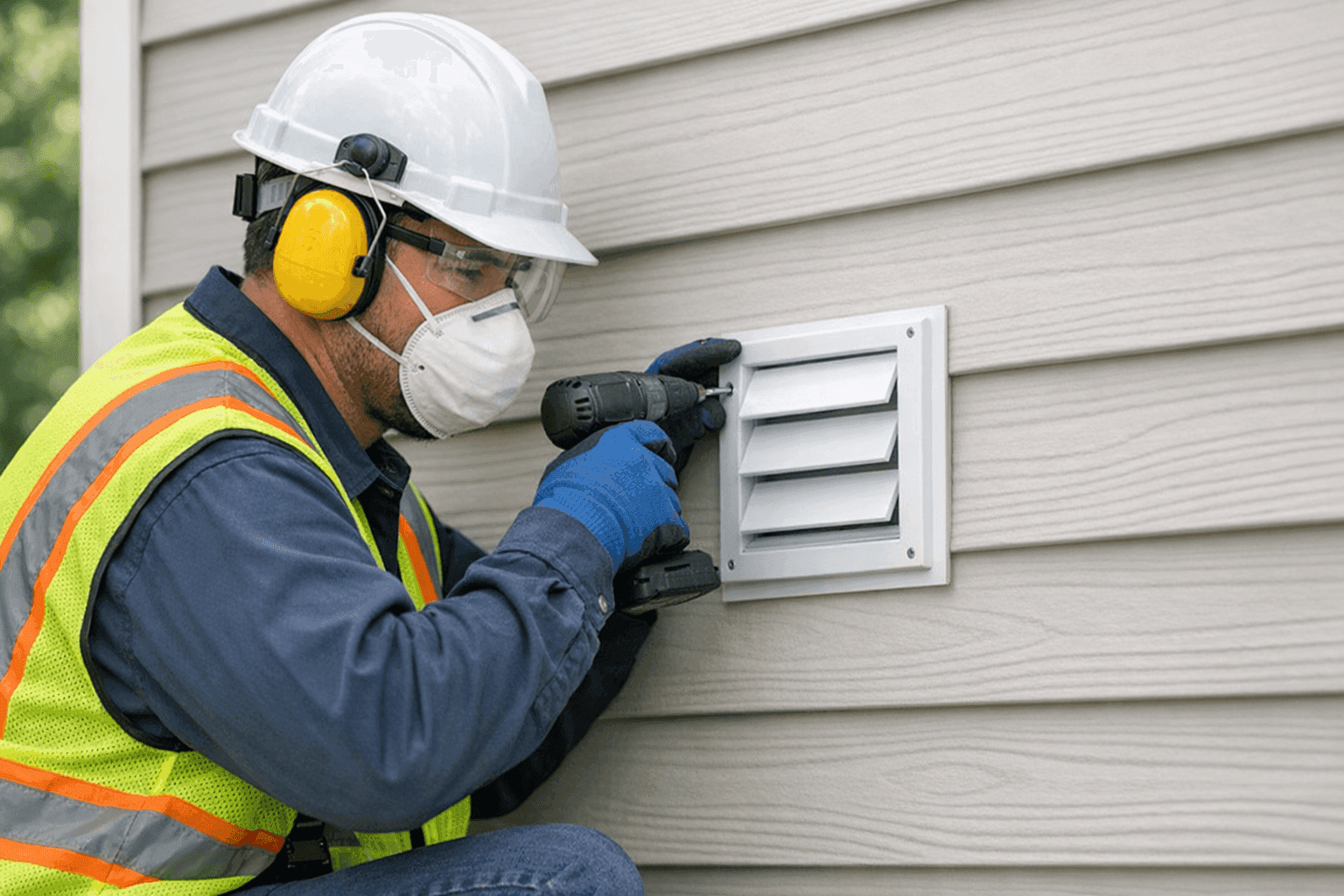
- Siding vents: Specially designed panels or inserts that blend with your exterior.
- Gable vents: Encourage cross-ventilation in attics and upper walls.
Retrofitting older homes? Modern solutions can often be added without major disruption. A pro can assess your setup and recommend the best system.
Health and Structural Benefits
Ventilation is more than a building requirement. It’s protection—layered and invisible.
- Stops rot: Dry wood resists decay and pests.
- Prevents mold: Mold needs moisture to grow. Good airflow keeps it away.
- Reduces energy bills: Dry insulation works better, boosting your home’s efficiency.
- Protects paint and caulk: Surfaces stay drier, lasting longer.
- Preserves structure: No more hidden water damage or surprise repairs.
A well-ventilated house is a healthier house. The EPA warns that indoor mold can trigger asthma, allergies, and even respiratory infections. Siding ventilation keeps those risks outside.
What Happens Without Ventilation
Picture a sponge sealed in plastic. It never dries out. Over time, it smells, sags, and falls apart. That’s what happens to your home—slowly, invisibly—when siding can’t breathe.
Rot starts at the edges. Framing weakens. Paint bubbles and peels. Soon, you’re not just facing a siding issue but a full-blown structural problem.
Quick Safety Checklist for Homeowners
Before you panic or reach for a crowbar, use this simple checklist:
- Check for visible mold or rot behind siding panels.
- Look for condensation on windows or walls.
- Inspect soffits and gables for clear airflow.
- Feel siding boards—soft spots mean trouble.
- Smell for that musty, “old basement” odor.
If you spot any issues, it’s time to call in the pros.
DIY vs. Call a Pro
Some jobs are weekend-warrior friendly. Siding ventilation isn’t one of them. The work needs precision: cutting, sealing, flashing, and weatherproofing. One wrong move and you invite water in, not out.
- DIY can help with minor cleaning or clearing blocked vents.
- For installation, repair, or retrofitting, trust a qualified team with experience in Siding Flashing Repair.
Professional Installation Steps
Here’s what happens when you call Kroll Siding:
- Inspection: We look for hidden damage, trapped moisture, and airflow blockages.
- Planning: Choosing the right solution for your siding and climate.
- Preparation: Removing panels, inspecting sheathing, and fixing rot.
- Installation: Adding vents, rainscreens, or soffit systems to code.
- Sealing: Ensuring every seam, joint, and flashing is weatherproof.
- Final check: Testing airflow and moisture levels to ensure your home stays dry.
Prevention & Maintenance Tips
Ventilation systems aren’t set-it-and-forget-it. Keep things humming with these habits:
- Inspect vents and soffits each season for blockages.
- Clean away leaves, nests, and debris from airflow paths.
- Re-caulk and seal joints every few years.
- Power-wash siding annually, but avoid forcing water behind panels.
If you’re not sure where to start, schedule a Siding Weatherproofing consultation. It’s the first step to long-term protection.
Costs & Time Factors
How much does siding ventilation cost? It varies:
- Retrofitting: Adding vents or a rainscreen to an existing home is usually less expensive than replacing all siding.
- New construction: Built-in ventilation is more cost-effective and easier to install.
- Time: Most jobs take a day or two, with minimal disruption to daily life.
The real savings come later—when you’re not paying for mold remediation, rot repair, or new siding every few years.
When It’s an Emergency
Water pouring in after a storm? Walls soaked from a burst pipe? That’s an emergency. Mold growing faster than you can clean it? Don’t wait. Emergency siding services can stop damage from spiraling out of control.
Seasonal Considerations
Winter brings ice, snow, and condensation. Summer brings humidity and storms. Each season tests your siding’s ability to breathe:
- In cold months, watch for ice dams and frost at eaves.
- In summer, check for swelling, soft spots, or musty smells after heavy rain.
A quick seasonal inspection can save you major headaches.
Common Mistakes to Avoid
- Blocking soffit vents with insulation.
- Sealing every gap so tightly that air can’t circulate.
- Ignoring small leaks or patches of mildew.
- Using the wrong type of caulk or paint.
A careless fix now can lead to big repairs later.
Signs You Need Siding Ventilation Now
- New paint doesn’t last.
- Siding feels damp even when it hasn’t rained.
- Family members complain of allergies or breathing trouble.
- Your energy bills keep climbing, but your house never feels comfortable.
If you see yourself in these signs, it’s time to act.
Timeline & Disruption
Worried about a long, messy project? Most siding ventilation upgrades are straightforward. We work around your schedule and leave your property better than we found it. No drawn-out noise, no endless debris.
Materials and Equipment
Kroll Siding uses industry-approved vents, corrosion-resistant fasteners, and high-performance flashing. We follow local and national code guidelines to keep your home safe and compliant.
FAQ: Siding Ventilation Edition
Q: Can I add ventilation to my older home?
A: Yes. Retrofitting is possible and often recommended.
Q: Will vents show or change how my house looks?
A: Modern vents can be color-matched and hidden in trim or soffits.
Q: How often should my siding ventilation be checked?
A: Once a year, or after any major storm.
Q: Is ventilation only for certain siding types?
A: All siding needs to breathe—wood, vinyl, fiber cement, and metal included.
Local Siding Ventilation Help
If you’re searching for a reliable siding contractor in Rapid City with experience in modern ventilation, our team is ready to help.
Call Kroll Siding now — or reach us anytime at 888-892-6286 .