Siding and Energy Efficiency: What Homeowners Need to Know
Is your home always chilly in the winter—even with the heat cranked up? Or maybe it feels stuffy and warm in the summer, no matter how long the AC runs. That’s not just uncomfortable. It’s money slipping out through your walls.
At Kroll Siding, we know homeowners care about comfort, energy bills, and doing what’s right for the environment. But the link between siding and energy efficiency isn’t always obvious. Let’s break it down in plain language.
How Siding Affects Energy Use
Picture your house as a cozy mug of coffee. Siding acts like the mug’s outer wall—keeping heat in when it’s cold and blocking out the sun’s blaze when it’s hot. But if the mug has cracks or thin spots, warmth escapes. The same goes for siding.
Cracks, missing flashing, poor seals, or gaps let air and moisture sneak in. Your furnace and AC work overtime, and you pay more. The U.S. Department of Energy estimates that up to 25% of home energy loss happens through poorly insulated walls. That’s not small change.
Signs Your Siding Is Costing You
How do you know if your siding’s the culprit? Watch for these common red flags:
- Drafts near walls or electrical outlets
- Rising energy bills without obvious cause
- Peeling paint or warped panels
- Mold or mildew near siding edges
- Insects or critters sneaking inside
If any of these sound familiar, a siding inspection could be the first step to savings.
Best Energy-Efficient Materials 🏡
Not all siding is created equal. Some materials trap heat like a thick winter coat; others are more like a light sweater.
Top Performers:
- Insulated Vinyl Siding: Comes with built-in foam backing. Reduces thermal bridging.
- Fiber Cement Siding: Dense and durable, it resists heat flow.
- Stucco Siding: Offers natural insulation, especially when paired with added insulation boards.
- Metal Siding: With proper insulation, metal can be energy-efficient and long-lasting.
- Engineered Wood and Eco-Friendly Options: Some modern materials use recycled content and have high R-values (a measure of insulation quality).
Curious about the right fit for your home? Our eco-friendly siding options are worth a look.
Upgrading Insulation: What Actually Works
Adding insulation is like tucking your home in with an extra blanket. But it needs to be done right—or you’ll end up with cold feet.
Key Steps:
- Remove or Repair Damaged Siding: Address rot, mold, or leaks before insulating.
- Install Insulation Board: Rigid foam or mineral wool boards boost your walls’ R-value.
- Seal Gaps and Joints: Use caulking and flashing to block air leaks.
- Replace or Reinstall Siding: Ensure panels fit snugly to stop wind and moisture.
Check out our insulation installation page for more on professional methods.
Professional Installation vs. DIY
It’s tempting to tackle siding on a weekend. But insulation and siding are a bit like baking bread: the recipe matters, but technique is everything.
Professional crews:
- Know local building codes and safety practices (like IRC 2021 standards)
- Properly integrate flashing, weather barriers, and ventilation
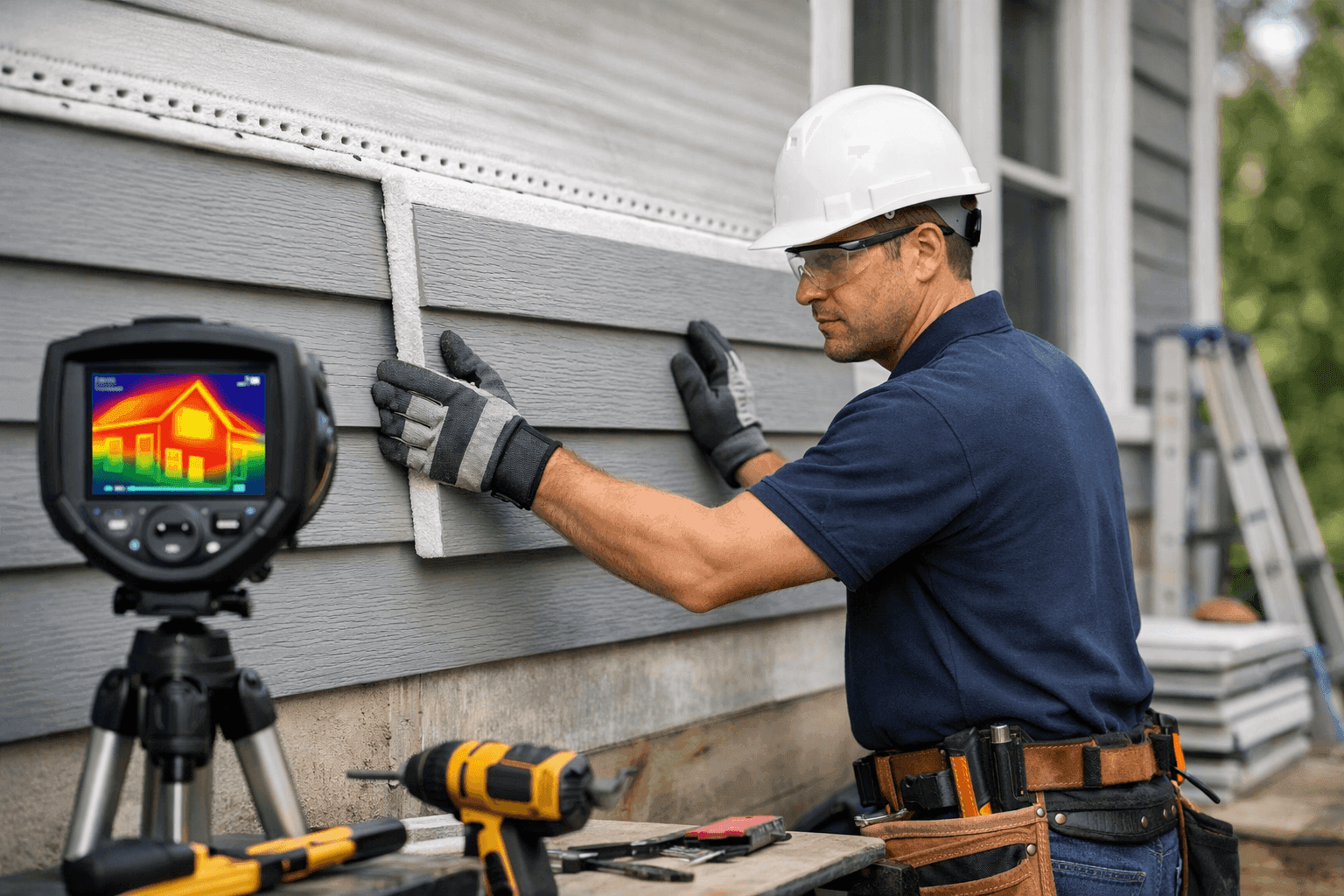
- Use tools like thermal cameras to check for hidden leaks
DIY installs often miss hidden air gaps or skip critical steps. If you want long-term comfort and savings, a pro touch pays off.
The Link Between Siding Condition and Energy Loss
Even the best siding won’t help if it’s falling apart. Gaps, cracks, and missing caulk act like open windows in winter. Regular maintenance—cleaning, caulking, and flashing repair—keeps your home sealed and cozy.
A recent case from a local homeowner: After years of drafty winters, they called for a siding inspection. We found aged caulk and a few hidden gaps. After repairs, their heating bill dropped by 18% over the next winter.
Siding Flashing Repair Near You
Flashing is the unsung hero behind your siding—it’s the shield that keeps water and wind from sneaking under panels. If flashing is damaged or missing, insulation can get wet and lose effectiveness fast.
If you notice water stains inside your walls, or see bent or corroded flashing outside, it’s time for prompt repair. Don’t let a small problem become a big bill.
Energy-Efficient Siding: Cost vs. Value
Upgrading siding isn’t pocket change. But quality materials and insulation can pay you back—month after month. According to ENERGY STAR, homeowners save an average of 15% on heating and cooling costs by sealing and insulating walls.
Factor in lower maintenance, fewer repairs, and a bump in home value, and the long-term math often makes sense.
Siding and Weather: Seasonal Considerations
Weather puts siding to the test. Winter freeze-thaw cycles, pounding summer sun, and spring storms all push materials to their limits. Regular inspections—especially after storms—catch issues early.
In areas with harsh winters or heavy storms, materials like fiber cement, insulated vinyl, or metal siding hold up well. Always clear gutters and check caulking in fall and spring.
Measuring Results: How Do You Know It’s Working? 📊
Wondering if your investment paid off? Look for:
- Lower utility bills over time
- More consistent indoor temperatures
- Less noise from outside
- Fewer drafts and hot/cold spots
For hard numbers, consider a professional energy audit. Tools like blower doors and infrared cameras show exactly where your home gains or loses heat.
Prevention and Maintenance Tips
A little attention goes a long way:
- Inspect siding twice a year for cracks, warping, or loose panels
- Clean siding to prevent mold and grime buildup
- Re-caulk joints every few years
- Keep gutters clear to avoid water damage
Proactive care keeps your siding strong—and your energy bills low.
Common Siding Mistakes That Cost You
It’s easy to overlook small details. Here are pitfalls we see most often:
- Skipping insulation during siding replacement
- Using low-quality caulk or skipping flashing
- Ignoring small cracks or gaps
- Choosing the wrong material for your climate
Avoiding these mistakes can mean years of comfort and savings.
When to Call for Emergency Siding Services
After a big storm or sudden damage, don’t wait. Broken panels, exposed insulation, or water leaks can turn into mold or structural problems fast. Emergency siding repair restores your home’s barrier before small issues grow.
Siding for New Construction: Plan for Efficiency from the Start
Building a new home? Now’s your chance to do it right. Choose insulated siding, high-R-value materials, and proper weatherproofing. It’s like setting your thermostat before you even move in. Future you (and your wallet) will thank you.
Siding Ventilation: The Invisible Protector
Good siding isn’t just about stopping air—ventilation matters, too. Properly vented soffits and fascia let your walls breathe, preventing moisture buildup and mold. Ask about ventilation solutions when planning upgrades.
Siding FAQ: Quick Answers
How often should I inspect my siding? At least twice a year, plus after major storms.
Can I add insulation without replacing all my siding? In some cases, yes. But full replacement allows for a seamless barrier.
Is “green” siding worth it? Eco-friendly materials save energy and often last longer, making them a smart investment.
Real Homeowner Results: Comfort You Can Feel
One Omaha family told us: “Our old siding had gaps everywhere. After Kroll Siding upgraded our insulation and replaced damaged panels, our house felt quieter—and we shaved over $400 off last year’s energy bills.”
See more about our siding services in Omaha if you’re searching for reliable help with siding and insulation.
Final Word: Your Home, Your Comfort, Your Savings
Your siding is more than just a pretty face for your house. It’s a shield, a blanket, and a silent partner in your comfort and energy savings. Whether you’re mending a drafty room, planning a new build, or just curious about smarter ways to save, Kroll Siding is here to help.
Call Kroll Siding now — or reach us anytime at 888-892-6286 .