Siding Caulking and Sealing: Best Practices for a Leak-Free Home
Do you ever feel a draft sneaking in around your windows or see rainwater tracing a path down your living room wall? Small gaps in your siding can become big headaches fast. At Kroll Siding, we know that a perfectly sealed home isn’t just about curb appeal—it’s about comfort, safety, and energy savings.
Siding caulking and sealing might sound simple, but the details make all the difference. Let’s break down where to seal, which products hold up best, and how to avoid the little mistakes that lead to leaks down the road.
Why Caulking Matters
Picture your siding as a raincoat for your home. If there’s even a pinhole, water finds its way in. That’s how rot, mold, and drafts begin. Caulking and sealing aren’t just about keeping the rain out—they protect your insulation, wood framing, and even your energy bills from taking a hit.
Proper sealing is also a key part of Siding Flashing Repair near you, since flashing and caulk work together to direct water away from vulnerable joints. According to the International Residential Code (IRC), all siding penetrations and intersections must be sealed to prevent water intrusion.
Step-by-Step Caulking Guide 🛠️
Ready to tackle your siding? Here’s a straightforward process that pros—and savvy homeowners—follow:
- Inspect: Walk around your home and spot cracks, gaps, or loose joints. Pay extra attention to corners, trim, and where siding meets windows or doors.
- Clean: Remove old caulk with a putty knife and scrub away dirt or mildew. Caulk sticks best to clean, dry surfaces.
- Choose the Right Caulk: (More on this in a moment!) Make sure it matches your siding material.
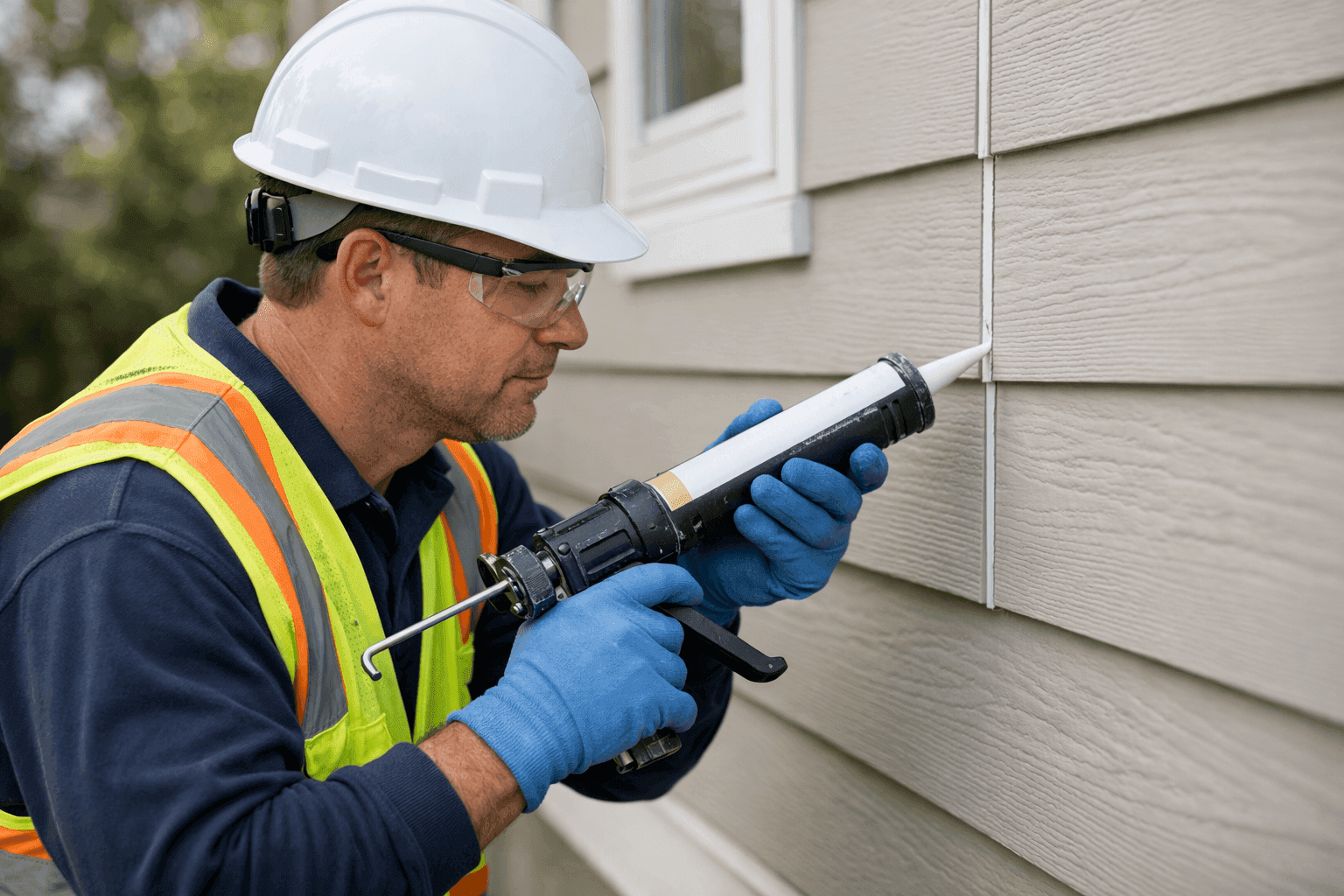
- Apply Evenly: Cut the caulk tube tip at a 45° angle. Hold the gun at the same angle and apply steady pressure. Fill the gap fully.
- Tool the Bead: Use a wet finger or caulk tool to smooth the bead, pressing it into the joint for a watertight seal.
- Wipe Excess: Clean up stray caulk with a damp rag before it dries.
- Let It Cure: Follow the manufacturer’s recommended drying times—usually 24 hours—before painting or exposing it to heavy rain.
Common Problem Areas to Seal
Some parts of your siding act like magnets for water and drafts. Focus your attention here:
- Window and Door Frames: Where the siding meets any frame or trim.
- Soffits and Fascia: Gaps between these roof features and the siding.
- Utility Penetrations: Vents, pipes, and wires that exit through the wall.
- Siding Joints: Overlaps, butt joints, and corners—especially on older wood or fiber cement siding.
- Trim and Moldings: Decorative pieces can mask tiny gaps.
- Foundation Line: Where siding meets the concrete or brick foundation.
Choosing the Right Sealant for Every Siding Material
Not all caulks are created equal. The wrong one can crack, shrink, or peel. Here’s what works best for each type:
- Vinyl Siding: Use 100% acrylic latex or siliconized acrylic caulk. It flexes with temperature swings and is paintable.
- Fiber Cement Siding: Polyurethane or high-quality acrylic latex caulk is best. Look for products rated for “cement board.”
- Wood Siding: Elastomeric or high-performance acrylic latex caulk. Avoid pure silicone—it doesn’t bond well to wood.
- Metal Siding: Polyurethane sealant or butyl rubber caulk resists rust and sticks to metal.
- Stucco Siding: Acrylic latex or elastomeric caulks work well, especially if painting.
Manufacturer recommendations can be found on caulk labels—always check for siding compatibility and outdoor durability. The American Architectural Manufacturers Association (AAMA) and ASTM International offer recognized caulk performance standards.
Quick Safety Checklist ⚠️
Safety first. Before you open that tube:
- Wear safety glasses and gloves.
- Work on a dry, calm day—wet or windy weather can sabotage your results.
- Use a sturdy ladder and never stretch beyond your reach.
- Ventilate well if using solvent-based products.
If you’re unsure about lead paint on older homes, consult EPA guidelines before sanding or scraping.
Common Mistakes to Avoid
It’s easy to make little missteps that create big problems later. Watch out for these:
- Skipping Surface Prep: Caulk doesn’t stick to grime or old, cracked beads.
- Wrong Product: Not all caulks are paintable or flexible—read the label.
- Overfilling Joints: Excess caulk can trap water instead of shedding it.
- Ignoring Expansion Gaps: Siding needs room to expand and contract. Never seal every seam on vinyl or metal siding.
- Rushing the Cure: Rain or washing too soon can wash out fresh caulk.
Signs Your Siding Needs Immediate Attention
Keep an eye out for red flags:
- Discoloration or bubbling paint on interior walls.
- Visible cracks or gaps in siding joints.
- Insects or spiders sneaking through tiny holes.
- Musty odors or visible mold near exterior walls.
- Drafts or rising energy bills.
If you spot any of these, prompt siding caulking and sealing can prevent costly repairs.
Professional vs. DIY Results
DIY caulking is doable for small gaps and easy-to-reach areas. But sometimes, the job calls for a pro touch:
- Multi-story homes.
- Complex trim or decorative details.
- Water damage or rotted siding.
- Emergency leaks after storms.
Professionals like Kroll Siding use high-grade sealants and precision tools. We inspect for hidden issues and warranty our work—plus, we know how to blend caulk for an almost invisible finish.
What to Expect When Pros Arrive
Kroll Siding technicians will:
- Perform a detailed inspection using moisture meters and thermal cameras if needed.
- Remove failing sealants and prep surfaces per manufacturer recommendations.
- Select and color-match the best caulk for your siding.
- Apply sealant with an eye for both function and aesthetics.
- Clean up all work areas and review the results with you.
Energy Efficiency Tips
Proper caulking does more than block water—it keeps your heating and cooling where it belongs. The Department of Energy estimates homeowners can save up to 20% on energy bills with thorough air sealing. Insulate and weatherproof at the same time for maximum benefit. For even more protection, pair caulking with siding weatherproofing.
Seasonal Considerations 🍂
Best time to caulk? Spring or fall, when temperatures are mild and humidity is low. Extreme heat can cause caulk to cure too fast and crack, while freezing weather prevents proper adhesion. Check your siding every season—harsh winters and stormy summers can open new gaps.
Prevention & Maintenance
A quick seasonal inspection and touch-up can save you thousands. Here’s what the pros recommend:
- Walk your home’s exterior every spring and fall.
- Look for peeling caulk, gaps, or soft spots in the siding.
- Clean with mild soap and water—no harsh chemicals.
- Replace caulk every 5–10 years, or sooner if you see cracks.
Timeline & Disruption
Most caulking projects for an average home can be finished in a day or two. There’s little mess and no major disruption—just a few hours of ladders, tools, and the satisfying sight of smooth, sealed joints.
Costs & Time Factors
DIY caulking costs as little as $50 for materials, but labor and expertise matter. Professional siding caulking services may run $300–$1,000 depending on home size and complexity. Emergency repairs after storms can cost more—insurance may help if you act fast.
When It’s an Emergency
If you see water pouring in, or sudden gaps after a storm, don’t wait. Emergency siding services from Kroll Siding can stop leaks in their tracks and prevent further damage. Quick action is always the best defense.
FAQ
How long does siding caulk last?
Most high-quality exterior caulks last 5–10 years. Inspect yearly and touch up as needed.
Can I paint over caulk?
Yes, if you use a paintable caulk (like acrylic latex). Wait until it’s fully cured.
What if my siding is very old?
Some older materials (like asbestos or lead paint) require special handling. Always ask a pro if you’re unsure.
How do I know if my home needs caulking or full siding replacement?
If gaps are widespread or siding is rotting, replacement may be best. Otherwise, fresh caulk can buy you years of protection.
Ready for a Leak-Free Home?
Siding caulking and sealing is one of the smartest ways to protect your home from water, wind, and high utility bills. Whether you’re sealing up a few small cracks or need a full inspection after a storm, Kroll Siding is here to help—year-round.
Call Kroll Siding now — or reach us anytime at 888-892-6286 .