Signs Your Siding Needs Emergency Repairs
Have you ever noticed water stains on your walls after a heavy rain? Or maybe you hear panels flapping in the wind late at night? Siding trouble doesn’t always wait for a convenient time. Sometimes, you need help—fast.
At Kroll Siding, we understand the stress and risk that comes with unexpected siding problems. This guide will help you spot the warning signs and know when it’s time to call for emergency siding repairs.
What Counts as a Siding Emergency?
Not every crack or blemish needs urgent care. But some problems can’t wait. Here’s when your siding demands immediate attention:
- Major water intrusion: If you see water streaming or pooling indoors, your siding’s defenses are failing.
- Large holes or missing panels: Whether from storm debris or an accident, big gaps leave your home exposed to weather and pests.
- Severe warping: Siding panels that bow or twist can pull away from the house, letting in moisture and air.
- Loose or dangling panels: After a windstorm, panels that rattle or hang can fall, posing safety hazards.
If your siding looks like it’s barely hanging on—or your living room suddenly feels like the outdoors—it’s time to act.
Quick Safety Checklist 🛑
Before you do anything else, take a breath. Your safety comes first. Here’s a quick checklist:
- Stay clear of hazards: Loose siding or trim can fall. Keep children and pets away.
- Shut off power if needed: If water is entering near electrical outlets, switch off the circuit.
- Document the damage: Take photos for insurance purposes, but don’t put yourself at risk.
According to the International Code Council (ICC), exterior walls must prevent water intrusion and maintain structural stability. If your siding is failing at either, treat it as urgent.
What to Do Right After You Spot Damage
Sometimes, siding emergencies hit fast—a branch crashes through during a storm, or you notice water on the floor after a cold snap.
Here’s what you can do while waiting for professional help:
- Cover exposed areas: If safe, use a tarp or heavy plastic to shield holes or gaps.
- Mop up standing water: Prevent further interior damage by drying affected areas.
- Check the attic and basement: Water intrusion can travel in hidden ways.
If you need immediate help, Kroll Siding responds promptly to calls for emergency siding services.
When to Call a Professional
DIY fixes have their place—tightening a loose screw or touching up paint is one thing. But emergency siding repairs are a different story.
- Hidden dangers: Water behind siding can cause mold or rot you can’t see.
- Structural risks: Removing or securing damaged panels wrongly could make things worse.
- Safety codes: Repairs must meet local building and fire codes.
If you’re facing more than cosmetic damage, don’t gamble. Call in a pro with the right tools and knowledge.
What Professionals Do on Arrival
When our team arrives, we follow a rapid assessment protocol:
- Safety first: Secure loose panels or trim to prevent injury.
- Damage mapping: Identify all compromised areas, even those not visible from the ground.
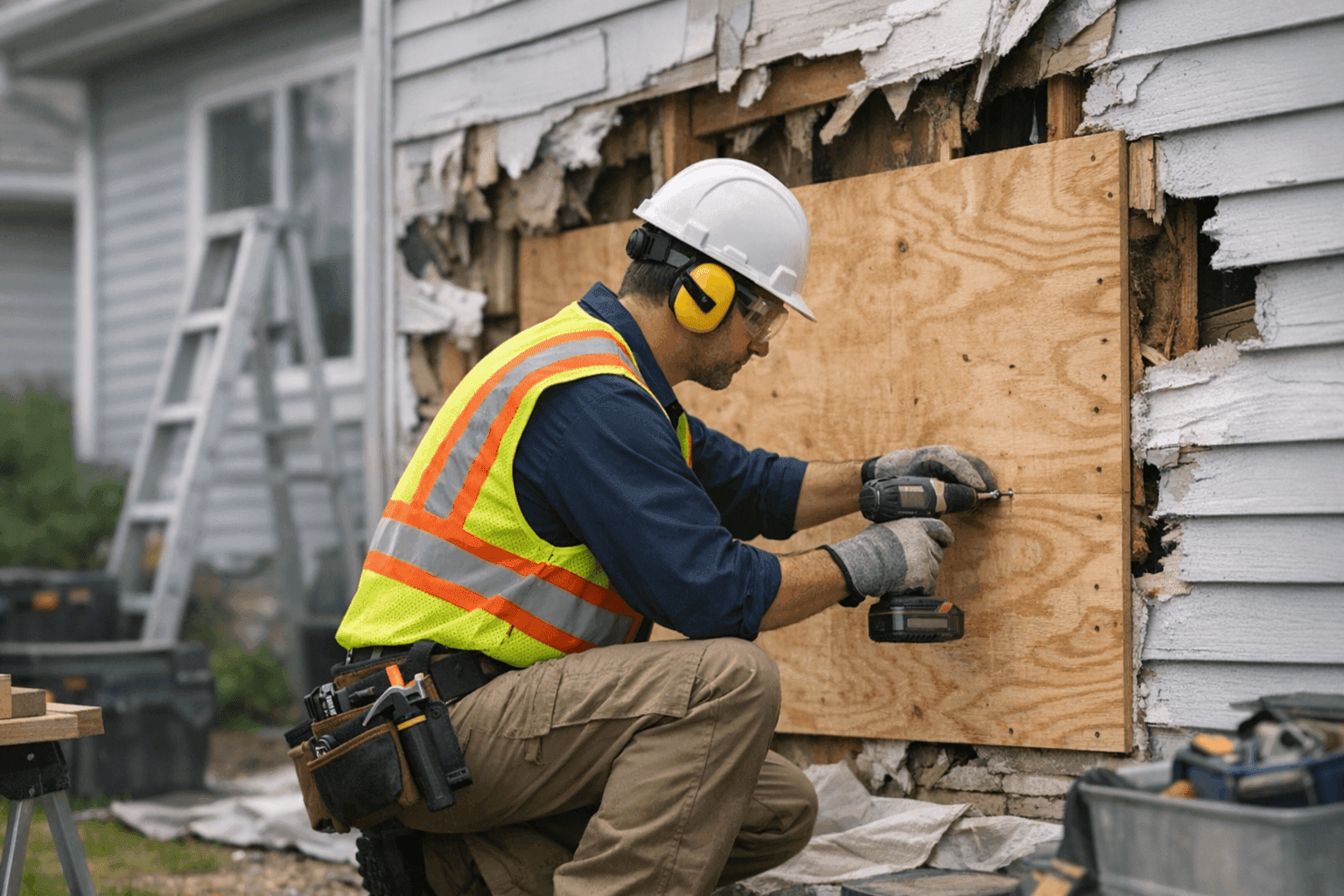
- Temporary protection: Install tarps or coverings to prevent further water entry.
- Detailed inspection: Check for hidden moisture, insulation damage, or compromised sheathing.
We use industry best practices and materials rated for severe weather. Our team also stays current on guidelines from the National Association of Home Builders (NAHB) and the ICC.
The Most Common Siding Emergency Scenarios
Emergencies usually strike after storms, high winds, or accidental impacts. The most frequent issues we see:
- Storm damage: Hail, flying debris, or fallen trees can leave holes or cracks that let in water.
- Wind-blown panels: Gusty conditions can bend or rip panels from the wall.
- Water leaks: Flashing failure or missing caulk lets moisture invade, sometimes undetected for days.
- Animal intrusion: Squirrels, birds, or insects can exploit gaps, making the problem worse.
If you’re dealing with storm aftermath, our storm damage repair service is designed for quick response and thorough restoration.
Why Timing Matters
Every hour counts with water intrusion or exposed sheathing. Here’s why:
- Mold grows fast: According to the EPA, mold can start within 24-48 hours in damp conditions.
- Structural wood weakens: Wet framing or sheathing loses strength quickly.
- Insurance complications: Delaying repairs can sometimes affect claims, especially if “neglect” is suspected.
Don’t let a small problem turn into a large one. Early action saves time, money, and stress.
DIY Temporary Fixes: What’s Safe, What’s Not
You can temporarily cover a hole with plastic sheeting and duct tape. Just don’t try to remove large panels or cut away damaged boards unless you know exactly what you’re doing.
- Never climb on wet or icy surfaces.
- Don’t use ladders in high winds.
- Skip complex repairs—leave those for the pros.
If you’re unsure, it’s always safer to wait for help.
Insurance and Documentation
If severe weather or accidental impact caused the damage, take these steps:
- Photograph all affected areas.
- Save receipts for urgent supplies (tarps, buckets, etc.).
- Contact your insurer early—many require prompt notice.
Most policies cover sudden siding damage, but keep detailed records.
Siding Materials: How They Respond in Emergencies
Not all siding reacts the same way to stress:
- Vinyl: Can crack or blow off in wind, but is easy to patch.
- Fiber cement: Holds up well but can break under heavy impact.
- Wood: Vulnerable to water and insects when exposed.
- Metal: May dent or bend, but resists most moisture.
Emergency repairs are tailored to your home’s specific material and structure.
Siding Flashing and Caulking: The Hidden Defenders
Often, the real culprit behind water leaks is failed flashing or caulk. These unsung heroes keep water out at window and door edges.
- Watch for cracked or missing caulk.
- Loose flashing can allow gallons of water to enter during even a brief storm.
Our team inspects and repairs these details as part of every emergency call.
Preventing Future Siding Emergencies
While you can’t control the weather, you can prepare your home:
- Schedule annual siding inspections.
- Keep trees trimmed and gutters clear.
- Check caulk, flashing, and soffits every spring and fall.
- Address small repairs before they grow.
Following these steps reduces your risk of a midnight siding disaster.
Seasonal Considerations
Winter brings ice dams and freeze-thaw cycles. Spring and summer storms throw wind, hail, and branches your way. Each season has its own challenges:
- Cold months: Watch for ice behind siding and blocked ventilation.
- Storm season: Secure loose objects around your home to prevent impact damage.
Schedule a siding checkup before each major weather shift for peace of mind.
How Long Will Emergency Repairs Take?
Most emergency repairs start with temporary protection—patching the hole or securing panels. Full repairs may require:
- Material matching: Siding colors and textures can take time to source.
- Weather delays: Rain or freezing temps may slow drying times.
- Insurance approval: Some work must wait for adjustor sign-off.
We’ll communicate clearly so you know what to expect every step of the way.
Common Mistakes Homeowners Make
- Waiting too long to call for help.
- Ignoring small leaks or cracks.
- Trying complex repairs without the right tools.
- Forgetting to check hidden areas like attics and crawlspaces.
When in doubt, reach out for a quick siding consultation.
FAQ: Quick Answers
Q: Can I wait until morning to call for emergency siding repair?
A: If water is entering or panels are unsafe, call now. Otherwise, temporary protection can buy you time.
Q: Does my insurance cover siding emergencies?
A: Most policies do, if the cause is sudden and accidental. Check your policy or talk to your agent for details.
Q: How soon can repairs start?
A: We offer rapid response for emergencies, with assessment and temporary fixes same-day in most cases.
Ready for Fast, Reliable Help?
Don’t let damaged siding put your home or family at risk. If you’re searching for "Siding Flashing Repair near you" or have urgent siding needs, trust Kroll Siding to respond quickly and professionally.
If you’re in the Reno area and need help with siding repair and replacement, we’re just a call away.
Call Kroll Siding now — or reach us anytime at 888-892-6286 .