What Happens During a Professional Siding Inspection?
Have you ever noticed a small crack in your siding and wondered, “Is this a big deal?” You’re not alone. Most homeowners miss early warning signs until a problem grows—a leak, a draft, or worse, visible mold. A professional siding inspection isn’t just a box to check. It’s a vital step in keeping your home safe, dry, and looking its best.
At Kroll Siding, our certified inspectors bring years of hands-on experience, sharp eyes, and a methodical approach. Here’s what you can expect when you schedule an inspection—and why it matters for every homeowner.
Why Inspect Siding?
Think of your siding as your home’s raincoat. It shields against wind, water, and harsh sun. Over time, even the toughest siding suffers. Inspections reveal what the eye can’t see from the driveway—hidden rot, loose trim, or ventilation gaps that let moisture creep in. Left unchecked, these small flaws can snowball into expensive repairs.
Regular siding inspections are recommended at least once every two years, according to the International Association of Certified Home Inspectors (InterNACHI). Annual checks are wise after major storms or if your home is older.
Inspection Checklist: What Gets Checked 🔍
Our siding inspectors follow a thorough checklist. Here’s what we look for:
- Cracks and Gaps: Even hairline splits can let water inside.
- Warping or Buckling: Signs that moisture has gotten behind panels.
- Loose or Missing Pieces: Including flashing, soffits, fascia, and trim.
- Caulking and Seals: Dried, cracked, or missing sealant around windows, doors, and joints.
- Discoloration or Stains: Could signal mold, rot, or water leaks.
- Nail Pops or Fastener Issues: Exposed nails let in water and weaken the structure.
- Ventilation Openings: Ensuring soffits and vents are clear and intact.
- Gutter Health: Blocked or damaged gutters can cause siding problems.
- Insulation and Underlayment: Where accessible, we check for dampness or deterioration.
Every home is unique, so if you have specialty siding (like stucco, fiber cement, or metal), we tailor the inspection to your materials.
Tools Pros Use
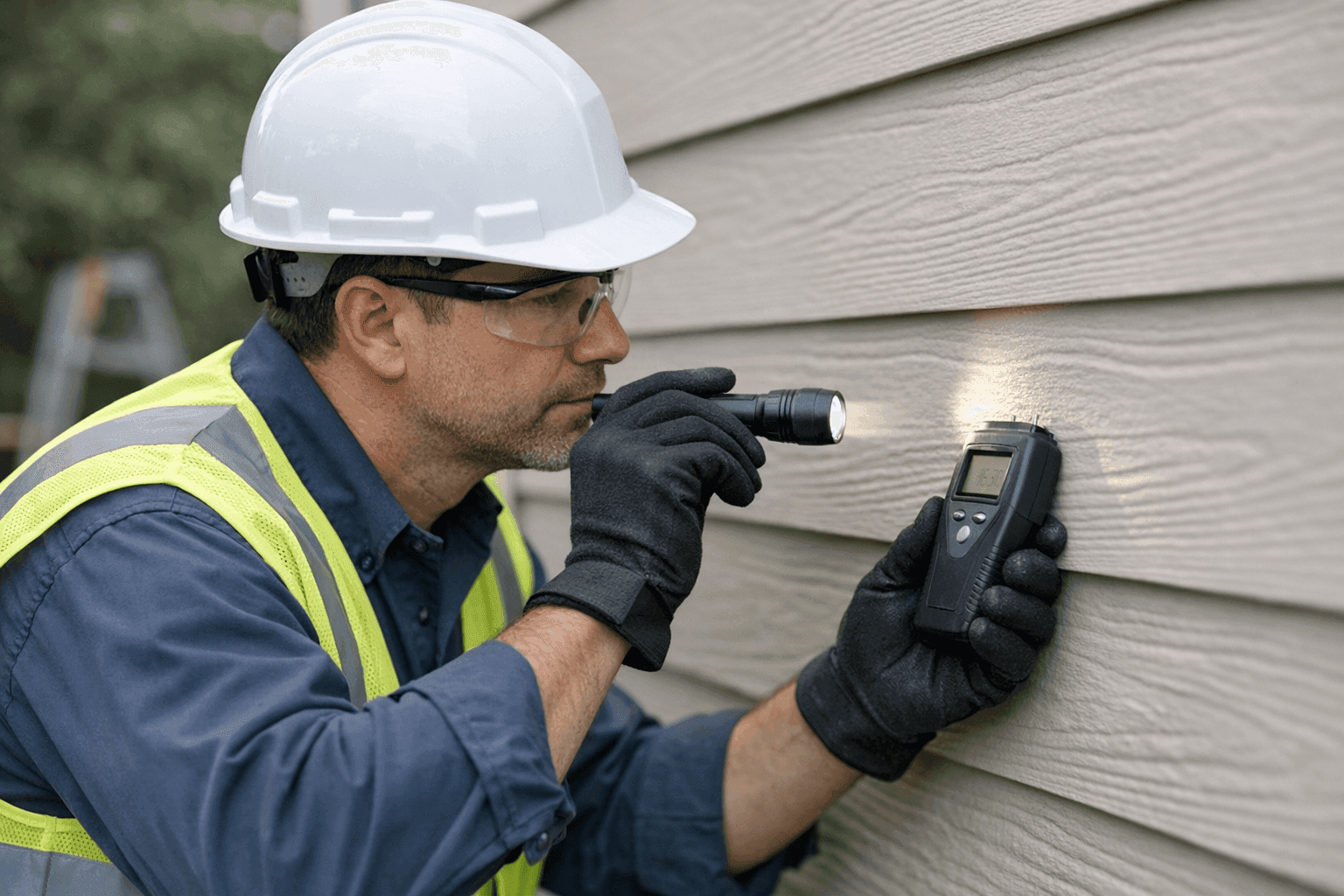
Inspectors come prepared, much like a detective with their favorite kit. Some of the tools in our bag:
- Moisture Meters: To find hidden dampness behind panels.
- Thermal Cameras: Spot temperature differences that hint at leaks or insulation gaps.
- Ladders and Safety Gear: For a close look at high places.
- Inspection Mirrors: To peek behind tricky corners and under eaves.
- Flashlights: Because trouble likes to hide in the shadows.
A keen eye is our best tool, but the right equipment means nothing slips past unnoticed.
What Pros Do On Arrival
We start with a friendly walkaround. You tell us about any recent storms, odd drafts, or spots you worry about. This real-life context helps us focus on areas that matter most.
Next, we inspect from the ground up—checking all sides, corners, and around windows and doors. If needed, we use ladders for second stories or hard-to-reach places. Expect us to ask questions or point out things as we go. It’s a team effort: your insights plus our expertise.
Signs of Trouble: What We Find Most Often
Not every inspection turns up disaster. But here’s what commonly shows up:
- Faded Paint or Peeling: Sun and weather wear down finishes, especially on wood siding.
- Soft Spots: Tap the siding—if it sounds hollow or feels spongy, rot could be lurking.
- Bug or Animal Damage: Insects and critters sometimes nest behind panels.
- Improper Flashing: Missing or poorly installed flashing leads to leaks, especially near roofs and windows.
- Blocked Vents: This can cause attic moisture and raise energy bills.
Catching these early means repairs are smaller, easier, and less expensive.
DIY vs. Call a Pro
A quick visual check is always smart, especially after storms. Walk around your house and look for anything out of place. But be honest—most problems hide where you can’t see or reach safely.
Certified inspectors have the training, tools, and experience to spot subtle signs and prevent future headaches. Sometimes, the peace of mind is worth more than the price of the visit.
Quick Safety Checklist for Homeowners
Before the inspector arrives, make sure:
- Pets are secured indoors.
- The exterior is accessible (move grills, furniture, or potted plants away from the siding).
- Let us know if you’ve noticed leaks, drafts, or water stains inside.
Simple prep makes the inspection smoother and faster.
Timeline & Disruption: What to Expect
Most single-family home siding inspections take 60–90 minutes. Larger homes or complex repairs may require more time. We respect your schedule and minimize disruption. You don’t need to leave the house—just keep access clear.
Materials & Equipment: Why They Matter
Siding isn’t one-size-fits-all. Wood, vinyl, fiber cement, metal, and stucco each age differently. Our inspectors know what to look for with each material, from vinyl warping to fiber cement cracks.
We follow best practices from the Vinyl Siding Institute and manufacturer guidelines for specialty products. That means your inspection is tailored to your home’s needs.
Common Mistakes Homeowners Make
- Ignoring tiny cracks or missing caulk, thinking it’s no big deal.
- Skipping regular gutter cleaning—a top cause of siding water damage.
- Trying to patch or seal over rotted wood without fixing the moisture source.
- Overlooking attic ventilation, which can silently damage siding from the inside out.
A professional eye keeps these small mistakes from turning into big repairs.
Prevention & Maintenance: Planning Ahead 🗓️
The real value of inspection is prevention. After we finish, you get a clear, easy-to-read report. It lists what’s working, what needs a tweak, and what’s urgent.
We’ll work with you to build a maintenance plan—simple steps like seasonal cleaning, timely caulking, and regular siding maintenance checks to keep your home in top shape. If you’re ready to add insulation or upgrade to eco-friendly siding, we can advise on the right time and materials.
When It’s an Emergency
Storm damage, sudden leaks, or visible holes in your siding? That’s an emergency. Fast action is crucial to prevent bigger issues inside your walls. If this happens, call us right away. We offer emergency siding services for urgent repairs.
Costs & Time Factors
The cost of a professional siding inspection is small compared to the price of major repairs. Think of it like changing the oil in your car—it’s an investment in your home’s health and value. Inspections can also help with insurance claims after storm damage.
Seasonal Considerations
Spring and fall are ideal times for siding inspections. After winter’s freeze and summer’s heat, siding materials expand and contract, sometimes causing cracks or gaps. Schedule inspections before major weather shifts to catch problems early.
Real-Life Example: A Hidden Leak
Recently, a homeowner called us for a “tiny draft” near their kitchen window. Our inspector found a small gap in the siding, hidden behind a garden hose reel. Inside, moisture had started to rot the sheathing. A quick repair and reseal saved the homeowner thousands in potential structural damage.
FAQ: Siding Inspections
How often should I get my siding inspected?
Every 1–2 years, or after severe weather.
Can I do it myself?
A basic check is fine, but pros see what you can’t—and keep you safe.
What if you find a problem?
We’ll explain the issue, suggest solutions, and help prioritize repairs.
Next Steps After Inspection
You’ll receive a written report, photos of any trouble spots, and a step-by-step plan. Small fixes may be handled on the spot. For larger repairs, we’ll schedule work at your convenience. If you’re considering a siding update, we offer siding material consultations to match your style and budget.
Ready to protect your home? For reliable siding flashing repair near you or to schedule a residential siding inspection, check out our Burlington siding services—we serve homes of all sizes with care.
Call Kroll Siding now — or reach us anytime at 888-892-6286 .